
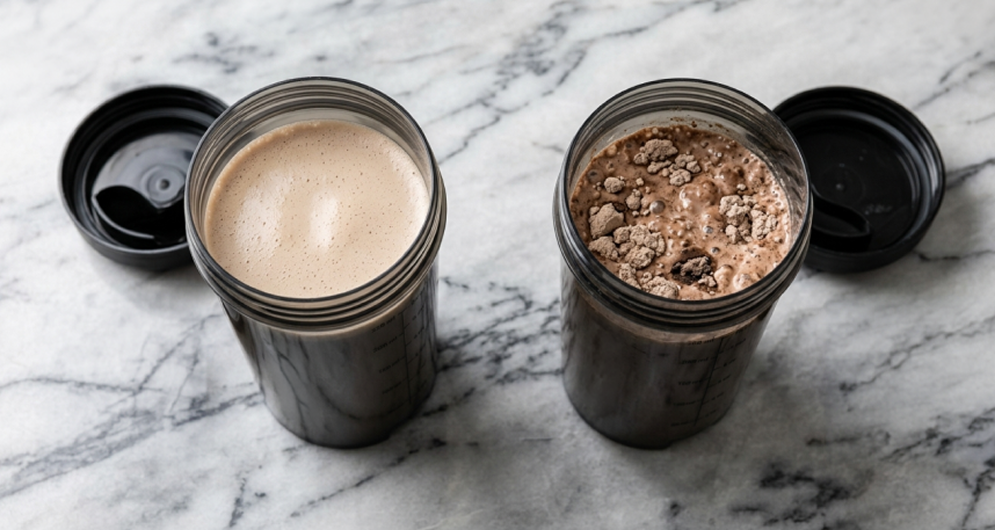
With so many protein options available, it can be hard to know which type fits your routine. Whey and casein are the two primary proteins found in milk, each with unique digestion, timing and benefits.
Protein powders can help you meet daily protein needs, support muscle recovery, and simplify nutrition. This guide breaks down whey, casein, and milk protein, how they differ, and how to choose the right option for your goals.
Overview of Dairy Protein Types
Dairy proteins are considered complete proteins, meaning they provide all essential amino acids needed to support your muscles, regardless of your physical activity levels. Since all three are especially high in Essential Amino Acids (EAAs), the key difference is not quality, but how quickly they digest and when they are most useful throughout the day.
- Whey protein: Fast-digesting protein. High-quality complete protein rich in EAAs, especially leucine. The fast absorption and high content of EAAs make it an ideal choice for a recovery protein after exercise but can be taken any time of day.
- Casein: Slow-digesting protein. Similarly high in EAAs compared to whey, but releases amino acids more gradually over time. Great choice to provide a more sustained amino acid supply to your muscles when you have prolonged periods of time where you are not consuming other protein.
- Milk protein: Naturally comprised of whey (~20%) and casein (~80%) that delivers an intermediate amino acid release profile that is slower than whey protein but faster than casein protein. A perfect “any time of day” protein to give your body a great boost of EAAs.
If you are wondering how to choose protein powder, start by thinking about digestion speed and your schedule. Whey delivers amino acids quickly when you need them most, while casein provides a slower, sustained release. Milk protein offers a combination of both, making these options complementary rather than competing. Let’s break down how each one works so you can decide what fits your routine best.
Milk Protein: Balance of Whey & Casein
Before we jump into whey and casein, it helps to understand milk proteins as a whole. All of these proteins come from dairy, specifically cow’s milk, which is made up of about 88% water, 5% carbohydrates, 4% fat, and 3% protein. From that protein portion, roughly 80% is casein and 20% is whey.
Milk proteins are naturally found in everyday foods such as milk, yogurt, cheese, cottage cheese, kefir, and other dairy-based products. Milk protein powders (e.g., “Milk protein”, “Milk protein concentrate”, “Milk protein isolate” on a product label) are created starting with fluid milk, then filtering and concentrating the naturally occurring proteins and keeping the ratio of casein and whey intact.
Why It’s Unique
- Blend of whey and casein means amino acids have an intermediate release profile, with some being digested more quickly and some more slowly.
- Offers a balanced approach that suits most occasions.
- Flexible across many routines.
Types of Milk Protein
- Milk Protein Concentrate (MPC): Filtered and concentrated to be high in protein, but still retaining some of the natural carbohydrates and fat found in milk along with both whey and casein proteins.
- Milk Protein Isolate (MPI): More highly filtered than MPC to remove most carbohydrates and fat, resulting in a higher percentage of protein by dry weight.
Best Use
- All-purpose daily protein.
- Anytime you want balanced protein supply for your muscles.
- Easy, versatile option that removes guesswork around timing.
Now that you understand how milk proteins work together, let’s take a closer look at each individually, starting with whey.
What Is Whey Protein?
Whey protein is a fast-digesting, complete protein derived from milk during the cheesemaking process. It delivers all nine essential amino acids and is naturally high in BCAAs, including leucine, which plays a key role in muscle protein synthesis. Because it digests quickly, amino acid levels typically peak in the bloodstream within about an hour after consumption. The high BCAA and EAA content, as well as fast digestion, help it support muscle recovery after a workout.
Why Whey Stands Out
- Complete protein with all essential amino acids.
- Naturally rich in BCAAs, including leucine.
- Provides BCAAs in a 2:1:1 ratio (leucine:isoleucine:valine), the same ratio found in milk and human muscle.
- Fast digestion for quick amino acid delivery.
- Supports muscle recovery.
Types of Whey Protein
Whey is separated during processing, then filtered and dried into powder. The more it is filtered, the more carbohydrates and fat are removed, and the higher the protein content becomes by dry weight. Whey comes in three main forms, based on filtration level:
- Whey Protein Concentrate (WPC): Up to ~80% protein by weight. Retains some naturally occurring carbohydrates and fat, with higher protein concentrations containing less of these carbohydrates and fats. It offers a balanced flavor and texture and is often the most cost-effective option.
- Whey Protein Isolate (WPI): Premium option, which is further filtered to remove most carbohydrates and fat, reaching up to ~90% protein by dry weight. Generally a leaner macro profile due to more stringent microfiltration.
- Whey Protein Hydrolysate (WPH): The most advanced whey protein processing method. Can be made from WPI and is hydrolyzed or partially broken down into smaller units or peptides. Hydrolysates can be more expensive and may have a slightly different taste.
Important: All forms of whey are considered fast-digesting proteins, and there is no meaningful difference in digestion or absorption rate between concentrate, isolate, and hydrolysate in real-world use. The primary difference is nutrition profile (protein vs carbs/fat), not speed. No type is inherently “better.” The best choice depends on your goals, preferences, and nutrition needs.
Best Use
- Post-workout recovery.
- Morning or between meals.
- Anytime you need a quick, convenient protein boost.
What Is Casein Protein?
Casein is the main protein in milk and digests more slowly than whey, providing a steady release of amino acids over several hours. Like whey, casein is a complete protein that contains all essential amino acids needed to support muscle recovery.
Unlike whey, which stays liquid, casein forms a gel-like structure in the stomach, slowing digestion and allowing amino acids to be released steadily over time rather than all at once.
Why Casein Stands Out
- Complete protein with all essential amino acids.
- Naturally contains BCAAs.
- Slower digestion for sustained amino acid delivery.
- Helps support a prolonged supply of amino acids to support muscles over longer periods.
- Supports muscle maintenance during extended periods without food, such as overnight.
Types of Casein Protein
- Micellar Casein: The natural form of casein found in milk and the most common in powders. Known for slow, steady digestion and a thicker texture when mixed.
- Calcium Caseinate: A more processed form of casein where the protein structure is altered (denatured), leading to better solubility/mixing and faster digestion compared to micellar casein.
Best Use
- Before bed to support muscles overnight.
- Between meals when there are longer gaps.
- During extended timeframes without food.
- Anytime you want a sustained protein option.
Whey vs. Casein: What’s the Difference?
The primary difference is digestion speed and timing, not quality. Using both strategically helps you match protein intake to your routine and recovery needs.
- Whey: Fast digestion, rapid amino acid delivery.
- Casein: Slow digestion, steady amino acid release.
How to Choose a Protein Powder
Start with your primary goal, then filter by nutrition, ingredients, and how the powder fits your routine. Taste and digestion matter, consistency comes from using something you enjoy. The steps below outline how to choose protein powder and identify the ideal protein powder for your needs across the protein options.
-
Match Your Goal
- Recovery and training: Whey delivers amino acids quickly.
- Daily protein intake: Whey or milk protein works well anytime.
- Long gaps: Casein or milk protein provides sustained support.
-
Consider Nutrition Needs
- Lean macros: Choose isolate, which is higher in protein and lower in carbohydrates and fat.
- Balanced option: Choose concentrate or blends.
- Sustained release: Choose casein or milk protein.
-
Fit It to Your Routine
- Choose something you’ll actually use consistently.
- Consider taste, mixability, and digestion comfort.
- Think about when you’ll realistically use it during the day.
- Keep it simple—the best protein is the one that fits your lifestyle.
There is no single best protein powder. Each type fits different needs depending on timing, goals, and preferences.
When and How to Use Protein Powder
Timing Strategies
- Post-workout: Whey supports quick recovery.
- Between meals: All three choices help maintain intake.
- Before bed: Casein supports muscles overnight.
- Anytime: Milk protein provides balanced support.
While timing can be helpful, total daily protein intake is the most important factor for results.
Ways to Use
- Shakes: Mix with water or milk for convenience.
- Smoothies: Blend with fruit, greens, and healthy fats.
- Balance carb-heavy meals or snacks: Add protein to foods like oatmeal, cereal, toast, or fruit-based snacks to round out your macros.
- Add across meals: Stir into breakfast, lunch, or dinner to easily increase protein intake.
- Upgrade everyday recipes: Add to pancakes, muffins, protein bites, or baked goods.
- Coffee and beverages: Mix into coffee, iced coffee, matcha, or lattes for an easy protein boost.
- Creative options: Add to yogurt bowls, overnight oats, protein yogurt dips, frozen yogurt bark, soups, or mashed potatoes.
- Snack boosters: Mix into yogurt, cottage cheese, or nut butter-based snacks.
Comparing Protein Types at a Glance
Here’s a quick comparison to help you see how each protein stacks up side by side:
| Type | Digestive Speed | Protein Density | Key Strengths | Best Use |
|---|---|---|---|---|
| Whey Protein Concentrate | Fast | Up to 80% protein by dry weight | Great taste, texture, and value | Post-workout and daily use |
| Whey Isolate | Fast | Up to 90% protein by dry weight | Lean macro profile | Post-workout and daily use |
| Hydrolyzed Whey Protein | Fast | Up to 90% protein by dry weight | Hydrolyzed into peptides | Specialized use or performance-focused routines |
| Casein | Slow | High | Sustained amino acid release and satiating | Before bed or during long gaps between meals |
| Milk Protein | Intermediate | High | Balanced blend of whey and casein | Anytime use and steady coverage |
Building Your Routine
You can keep it simple or combine types strategically:
- Use whey for quick protein when timing matters.
- Use casein for longer gaps or overnight support.
- Use milk protein for a balanced, all-in-one option.
Bottom Line
Whey, casein, and milk protein all come from the same source, milk, but are processed differently to support different needs. Whey provides fast amino acid delivery, casein offers slow, sustained release, and milk protein combines both. The differences are not about which is better, but how each fits your goals, schedule, and preferences. Choosing the right protein powder comes down to understanding how each type fits your goals, schedule, and preferences.
Frequently Asked Questions
1. Do I need protein powder if I already eat a high-protein diet?
Not necessarily. Whole foods should always be the foundation of your nutrition, but protein powder can help fill gaps, support recovery, and add convenience on busy days.
2. Can I use protein powder as a meal replacement?
No, protein powders are not considered meal replacements. Protein powder can help build a balanced meal, but it should not replace whole foods.
3. What is the best protein for beginners?
Start with a versatile option that tastes good and digests well. Whey protein concentrate or isolate works well for most people, while milk protein is a simple all-in-one option if you want a great “anytime” protein.
4. How much protein should I take per serving?
Most people benefit from about 20–40 grams per serving, depending on body size, activity level, and goals.
5. Can protein powder cause digestive issues?
In some cases. Milk naturally contains a carbohydrate called lactose, which some people may have a sensitivity or intolerance to. If this applies to you, choosing lower-lactose options like whey isolate may be helpful. It’s always a good idea to speak with your healthcare provider to determine what works best for your individual needs.
6. How fast does protein powder absorb?
Whey is considered a fast-digesting protein, delivering amino acids quickly, while casein digests more slowly and releases amino acids over time. The key difference is timing, not effectiveness.
7. Is there a best time to take protein?
Post-workout is a convenient time, but spreading protein throughout the day and including a pre-sleep serving can also support recovery and consistency.
8. Are there risks with over-consuming protein powder?
Excess protein can add unnecessary calories and displace other nutrients. Focus on meeting your daily needs rather than significantly exceeding them.


