

Protein Calculator
Get estimated daily protein requirements based on your training goals and expert advice to help you unlock more from your training.
Receive this report in your email and get 15% off your next order.

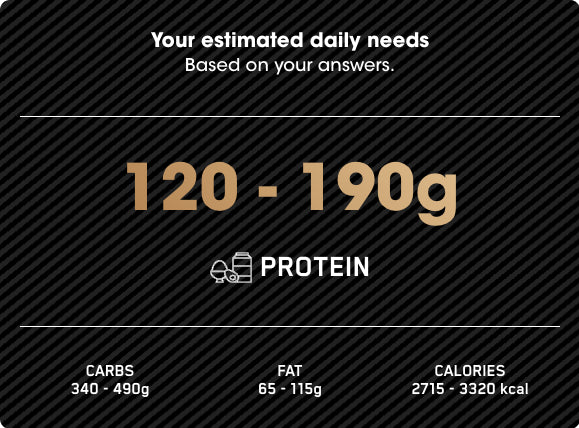
In under 60 seconds discover:
- How much protein per day you need, along with tailored recommendations for carbohydrates, fats, and calories based on your training goals.
- What Optimum Nutrition products are best suited to unlock more from your training and exercise.
- Expert tips to help you achieve your health and fitness goals.
We handle your personal information with care. View our PRIVACY STATEMENT to learn how we handle your data.
This calculator is for those aged 18 years and older. The protein calculator is for education purposes only. The calorie and macronutrient recommendations provided by this calculator are ESTIMATES based on independent scientific formula and should only be used as guidelines. We advise that those seeking specific guidelines consult a sports dietician/nutritionist.
FAQ
How Much Protein Do I Need a Day?
Protein needs vary by age, body weight, activity level, and goals, but most healthy
adults require approximately 0.8 to 2.2 grams of protein per kilogram of body weight per day (about 0.36 to 1.0 grams per pound).
Expanded Information:
Protein is an essential macronutrient required by all healthy adults. It helps support muscle health and provides the building blocks needed for many important structures and functions throughout the body. Active individuals, strength athletes, and endurance athletes often have higher protein needs than less active adults. Consuming protein consistently throughout the day can help support recovery, performance, and overall wellness.
Key Takeaways:
- Protein needs are individualized.
- Active adults often require more protein than inactive adults.
- Consistent daily protein intake is important for supporting recovery and performance.
How Much Protein to Gain Muscle?
Individuals focused on gaining muscle typically benefit from consuming approximately 1.6 to 2.2 grams of protein per kilogram of body weight per day (about 0.73 to 1.0 grams per pound) alongside regular resistance training.
Expanded Information:
Protein provides the amino acids needed to help support muscle protein synthesis and recovery. Resistance training creates the stimulus for muscle growth, while protein helps provide the building blocks needed for muscle repair and adaptation. Consuming protein consistently throughout the day and meeting total daily protein needs are generally more important than focusing on a single meal or shake.
Key Takeaways:
- Protein and resistance training work together.
- Daily protein intake is more important than perfect timing.
- Consuming protein throughout the day can help support muscle-building goals.
How Much Protein After Workout?
Consuming approximately 20–40 grams of protein (about 0.1–0.2 grams per pound for many exercise can help support muscle recovery as part of your total daily protein intake.
Expanded Information:
Exercise can create small amounts of stress within muscle tissue, and protein provides the amino acids needed to support recovery and rebuilding. While many people choose to consume protein after training, muscle recovery is an ongoing process and muscle protein synthesis can remain elevated for up to 48 hours following exercise. Consistently meeting your daily protein needs is more important than consuming protein immediately after exercise.
Key Takeaways:
- A serving of 20–40 grams of protein is commonly consumed after exercise.
- Recovery continues beyond the immediate post-workout period.
- Total daily protein intake remains the top priority.
How Much Protein Should a Woman Eat in a Day?
Protein needs for women vary by age, body weight, activity level, and goals, but most healthy women require approximately 0.8 to 2.2 grams per kilogram of body weight per day (about 0.36 to 1.0 grams per pound).
Expanded Information:
Protein is an essential macronutrient required by all healthy adults and helps support muscle health and many important functions throughout the body. Active women, strength athletes, and endurance athletes often have higher protein needs than less active individuals. Consuming protein consistently throughout the day can help support recovery, performance, and overall wellness.
Key Takeaways:
- Protein needs are individualized.
- Active women may require more protein than less active women.
- Consistent daily protein intake is important for supporting recovery and performance.
How Much Protein Do I Need Daily?
Protein needs vary by age, body weight, activity level, and goals, but most healthy adults require approximately 0.8 to 2.2 grams of protein per kilogram (about 0.36 to 1.0 grams per pound) per day.
Expanded Information:
Less active adults typically require less protein than strength athletes, endurance athletes, or highly active individuals. Total daily protein intake is the top priority, followed by protein distribution throughout the day. Consuming protein consistently across meals and snacks can help support recovery, performance, and overall wellness.
Key Takeaways:
- Protein needs are individualized.
- Active adults often require more protein.
- Total daily protein intake is the priority.
What Are the Signs You May Not Be Getting Enough Protein?
Not getting enough protein can make it harder to support muscle health, recovery, and overall nutrition needs.
Expanded Information:
Protein provides amino acids that support muscle, tissues, organs, and many important functions throughout the body. Because protein needs vary by age, body
weight, activity level, and goals, it is important to consume protein-rich foods consistently throughout the day. If you are unsure whether you are getting enough protein, consider using a protein calculator or consulting a registered dietitian or healthcare professional.
Key Takeaways:
- Protein supports many body functions.
- Protein needs vary by individual.
- Consistent protein intake matters.
Can You Consume Too Much Protein?
Protein needs vary by individual, so intake should align with body size, activity level, and overall diet.
Expanded Information:
Protein is essential for all healthy adults, but more is not always better for every individual. A balanced diet should include protein, carbohydrates, and fats in amounts that support your needs and goals. If you have health concerns or are unsure how much protein is right for you, consult a healthcare professional or registered dietitian.
Key Takeaways:
- Protein needs are individualized.
- Balance across all macronutrients matters.
- Personalized guidance may be helpful.
How Much Protein Do I Need to Gain Muscle?
Individuals aiming to gain muscle typically benefit from consuming approximately 1.6 to 2.2 grams of protein per kilogram of body weight per day (about 0.73 to 1.0 grams per pound) alongside regular resistance training.
Expanded Information:
Protein provides the amino acids needed to help support muscle protein synthesis and recovery. Resistance training creates the stimulus for muscle growth, while protein helps provide the building blocks needed for muscle repair and adaptation. Consuming protein consistently throughout the day and meeting total daily protein needs are generally more important than focusing on a single meal or shake.
Key Takeaways:
- Protein and resistance training work together.
- Daily protein intake is the priority.
- Consistent protein intake supports muscle-building goals.